Davao Heats Up on Day 2 of JKA International Gasshuku as Elite Black Belts Take Center Stage
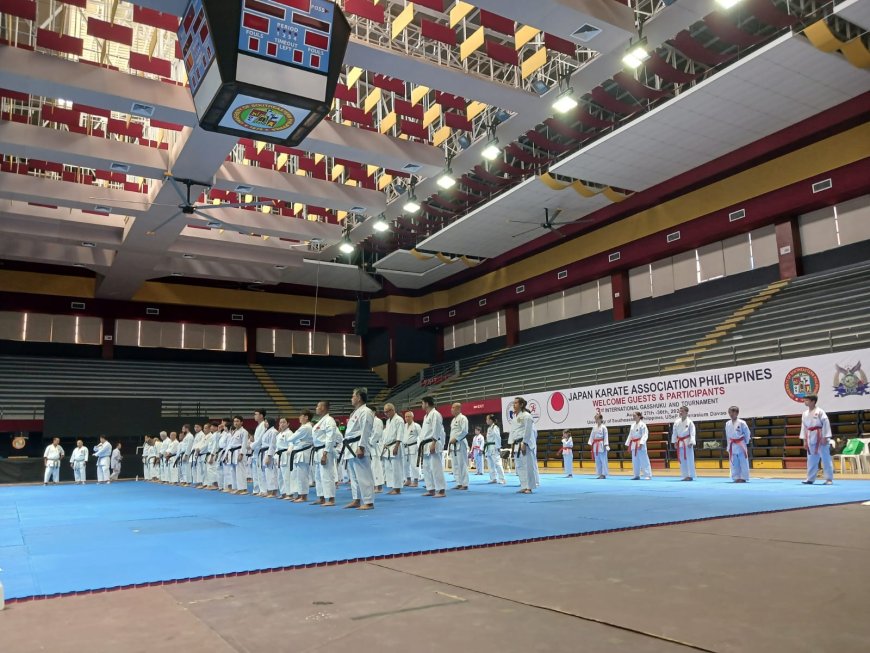
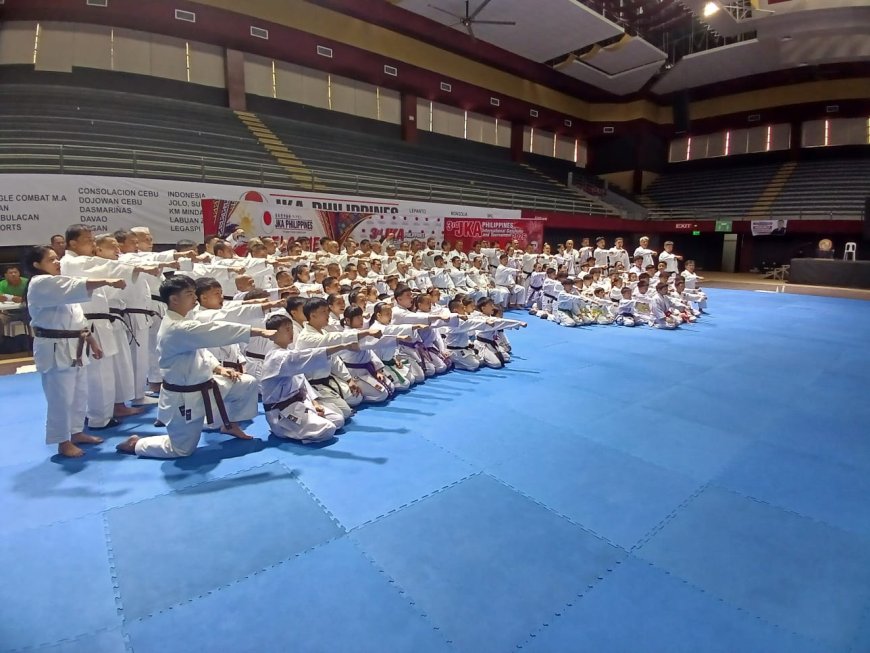
DAVAO CITY, Philippines — August 28, 2026 — The second day of the 3rd JKA Philippines International Gasshuku & Karate-Do Championship intensified Friday at the University of Southeastern Philippines (USeP), as international and Philippine delegations gathered for a full day of masters-led technical training, highlighted by the presentation of participating teams and the strong presence of highly experienced black belts from Mongolia and Indonesia.
 Tomas Kauer - Senior News Editor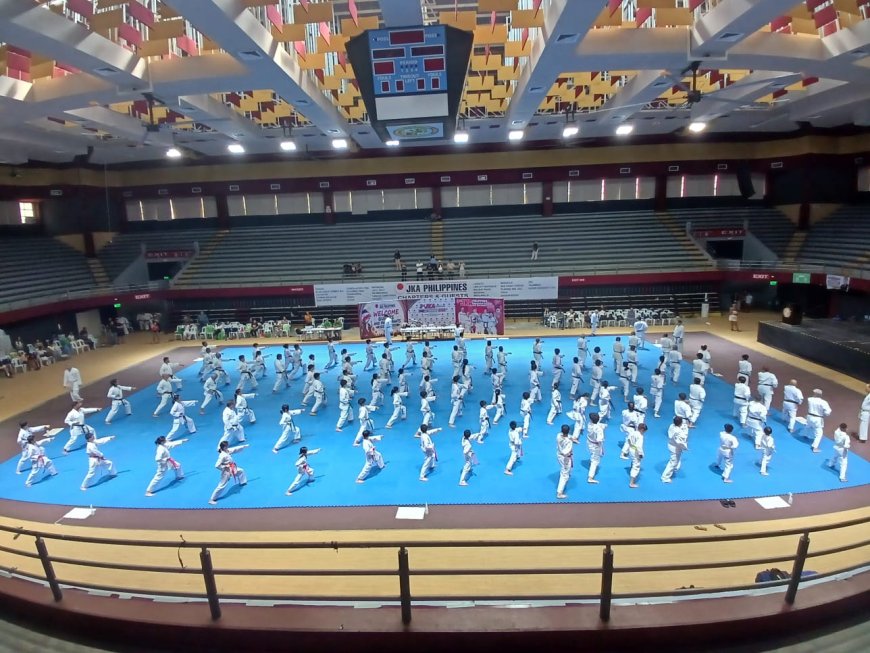
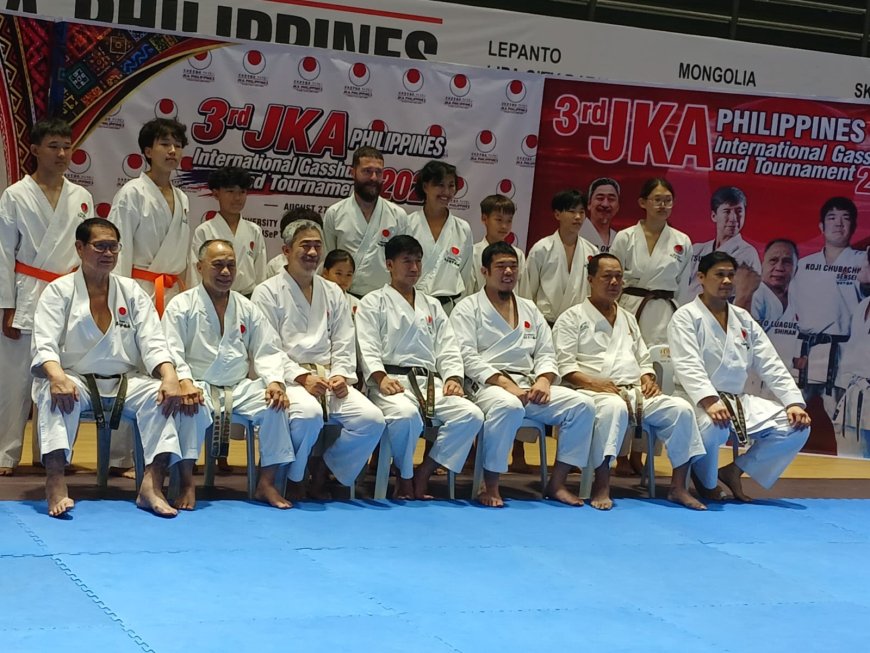
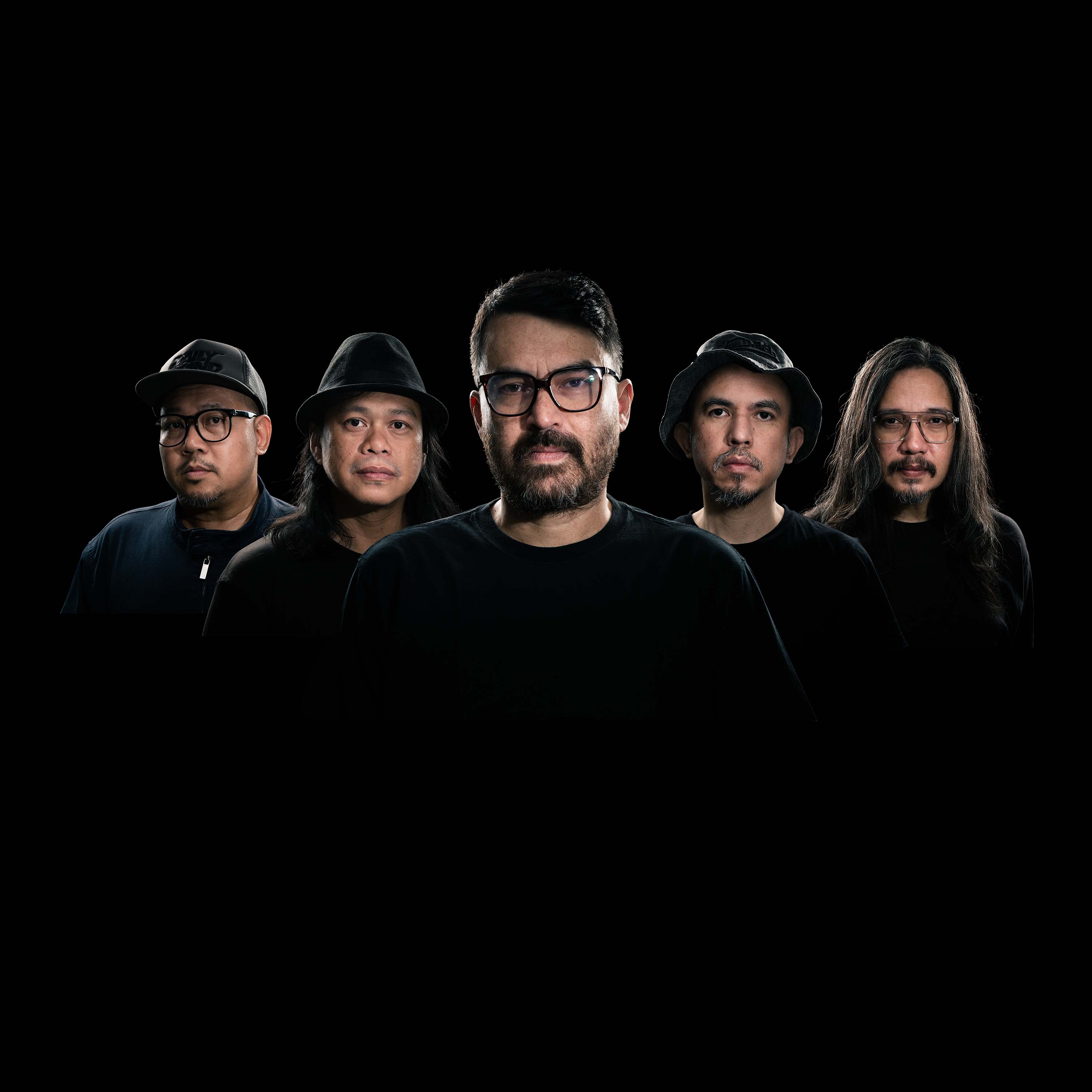
Mongolian Team
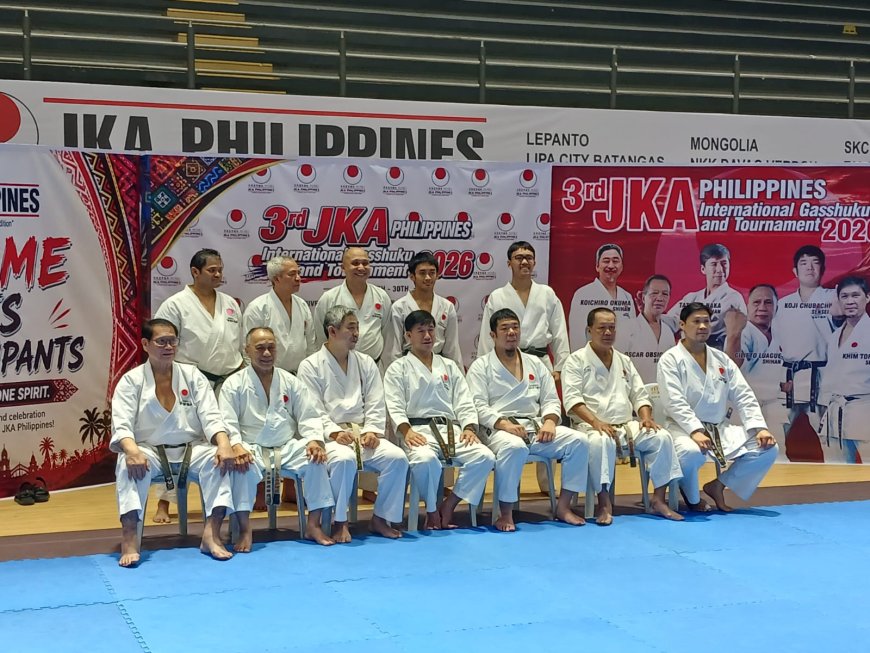
Indonesian Team
The gathering has transformed Davao City into an international center of traditional Shotokan karate, bringing together senior instructors, black belts, competitors, coaches and delegates representing different parts of the Philippines and abroad.
The presentation of delegations underscored the growing international character of the
championship, with Mongolia and Indonesia drawing particular attention for their contingents of seasoned and highly disciplined karate practitioners.
Their presence, together with JKA masters from Japan and some of the Philippines’ most experienced karate instructors, has given the Davao gathering an exceptionally high concentration of martial arts expertise.
Day 2 Focuses on Gasshuku and Masters-Led Training
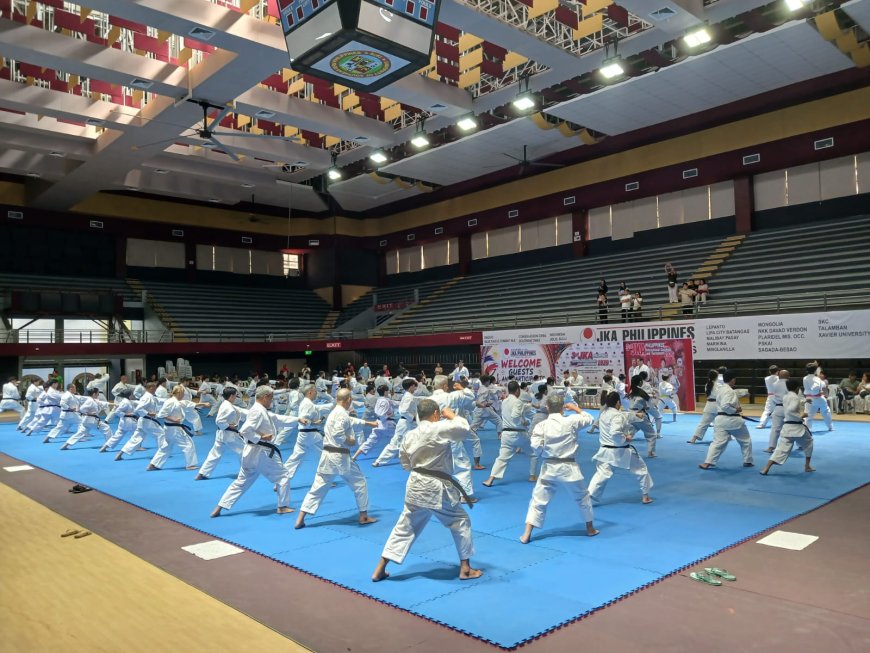
Unlike the tournament competition that follows, the second day is primarily devoted to the General Gasshuku, an intensive training program designed to deepen the technical knowledge, discipline and practical understanding of karate practitioners.
In traditional Japanese martial arts, a Gasshuku is an intensive training camp or extended training seminar where practitioners temporarily come together to concentrate on learning, physical conditioning, technical refinement and the deeper principles of their martial art.
For JKA practitioners, Gasshuku goes beyond ordinary karate practice. It provides students and black belts with direct access to senior instructors and masters who examine even the smallest details of movement — posture, balance, timing, distance, speed, power generation, breathing, concentration and control.
The official August 28 program moves participants through progressive training in kihon, or fundamental techniques; kata and bunkai, or the practical interpretation of kata movements; and kumite, or controlled fighting and sparring applications. Participants are grouped according to experience, from kyu-level practitioners to advanced black belts, allowing the masters to provide increasingly sophisticated instruction.
The advanced sessions go considerably deeper, addressing tactical fighting, distance or maai, timing, competition kata, opponent reading, combinations, feints, setups, control, and the efficient transition from traditional basic techniques into practical application.
This makes Day 2 essentially a masters’ classroom on the training floor — an opportunity for practitioners not simply to demonstrate what they know, but to have their techniques examined, corrected and refined according to traditional JKA standards.
Among the instructors listed in the official program are Koichiro Okuma Sensei, Tatsuya Naka Sensei and Koji Chubachi Sensei, conducting rotating sessions for different skill levels throughout the day.
The Gasshuku therefore represents one of the most important components of the entire four-day gathering. Competition determines who performs best on tournament day; Gasshuku develops the technical foundation, discipline and understanding that create better karate practitioners.
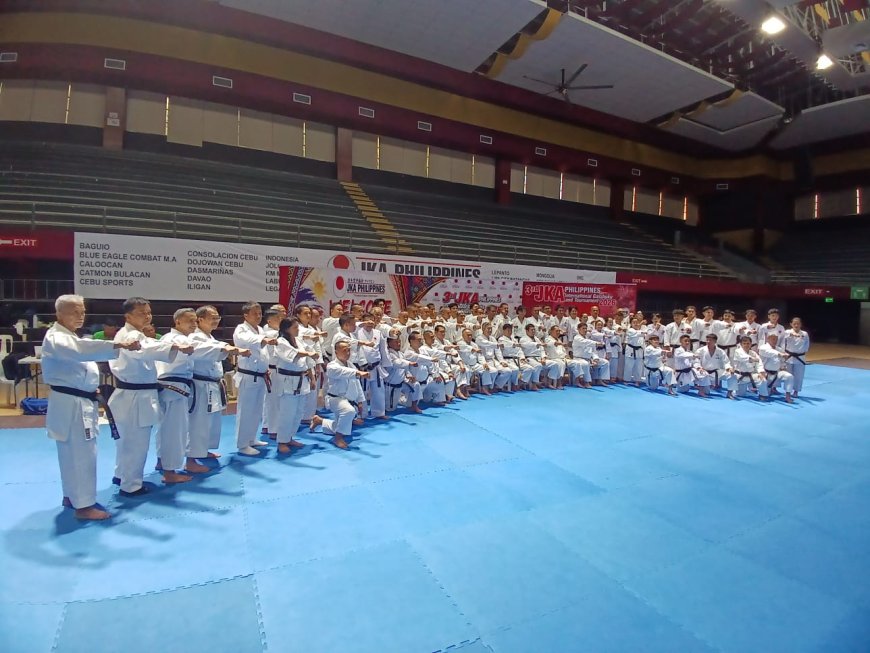
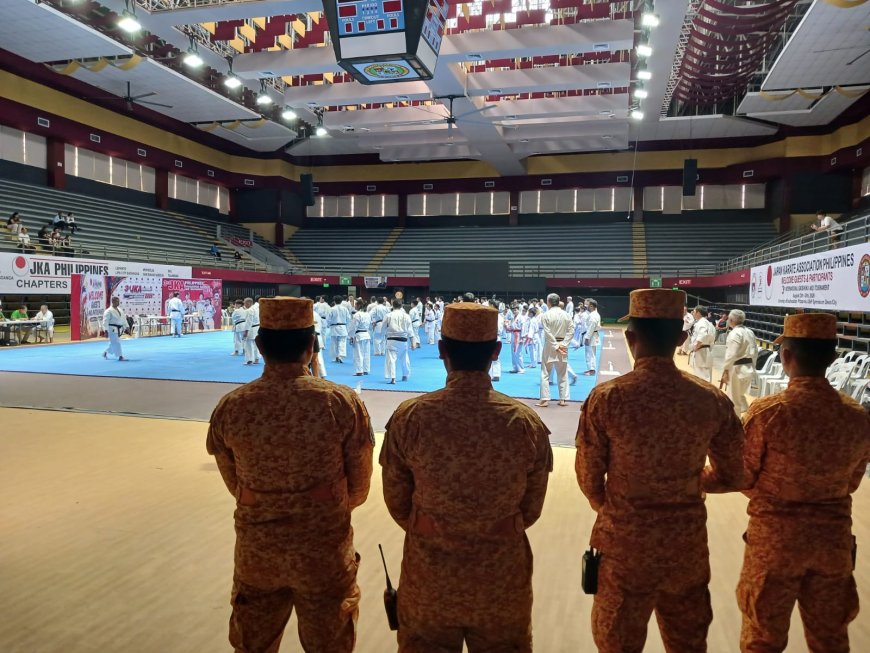
Security Remains on Heightened Alert
Full security operations also remain in effect throughout the second day as organizers and security personnel maintain a heightened posture because of the presence of international delegations, foreign representatives, distinguished guests, senior karate masters and the collective presence of a large number of black belts and competitors.
The security measures are intended to ensure the orderly movement and protection of athletes, officials, instructors, delegates, guests and spectators throughout the international gathering.
The concentration of international visitors and martial arts delegations has made coordination among tournament organizers, venue security and public-safety personnel an important part of the event's operations.
Security measures had already been strengthened for the opening of the four-day international gathering as foreign delegates, dignitaries and senior karate personalities began arriving in Davao City.
28 Teams and Delegations Represented
The competing teams and delegations participating in the Davao gathering include:
Baguio; Blue Eagle Combat M.A.; Caloocan; Catmon Bulacan; Cebu Sports; Consolacion Cebu; Dasmariñas; Davao; Dojowan Cebu; Iligan; Indonesia; Jolo, Sulu; KM Mindanao; Labuan Zamboanga; Legaspi; Lepanto; Lipa City, Batangas; Malibay, Pasay; Marikina; Minglanilla; Mongolia; NKK Davao Verdon; Plaridel, Misamis Occidental; PSKAI; Sagada-Besao; SKC; Talamban; and Xavier University CDO.
The breadth of participation demonstrates the geographical reach of the event — from Northern Luzon to Metro Manila, the Visayas and Mindanao — while the presence of Indonesia and Mongolia gives the championship an unmistakable international dimension.
The formal competition intensifies beginning August 29, when the event moves into tournament elimination rounds, followed by the championship and advanced divisions on August 30. The official four-day JKA Philippines program runs from August 27 to 30 at USeP in Davao City.
As the second day progresses, however, the emphasis remains firmly on what lies at the heart of traditional karate: training, discipline, technical excellence and the transmission of knowledge from master to student.
With distinguished masters, international black belts and hundreds of practitioners sharing the same training floor, Day 2 of the Davao Gasshuku is proving that the gathering is much more than a competition.
It is an international meeting of karate knowledge, tradition and discipline — with Davao City at its center.