JKA Philippines: Upholding the Legacy of Traditional Shotokan Karate
March 6, 2026 - Manila, Philippines — The history of the Japan Karate Association (JKA) in the Philippines traces its roots to 1958, marking the beginning of a long-standing tradition of authentic Shotokan karate instruction that continues to influence generations of Filipino martial artists.
 Tomas Kauer - News Writer and Moderator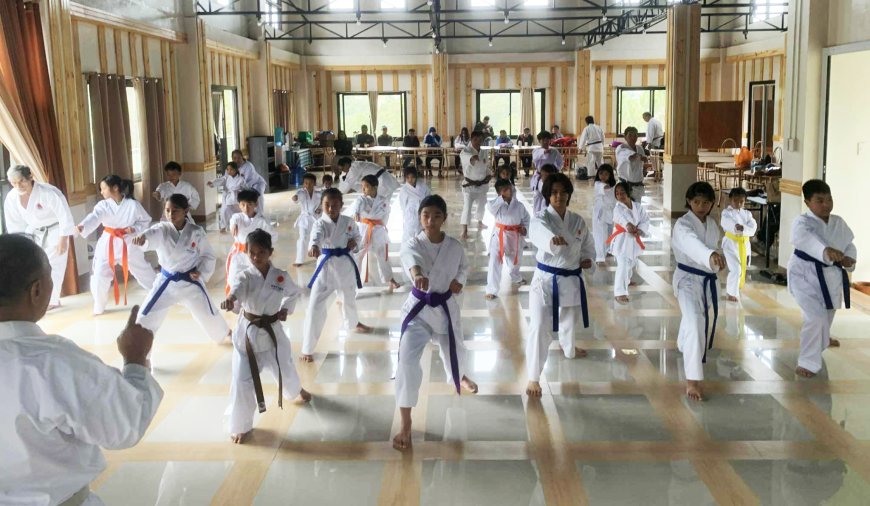
The first official JKA instructor dispatched to the Philippines was Takayuki Mikami, who arrived in Manila in 1958. During his year-long stay, Mikami Sensei introduced and promoted traditional Shotokan karate, laying the foundation for the growth of the discipline in the country.
Several years later, in 1965, Kunio Sasaki arrived in the Philippines as the second JKA instructor. Although Sasaki initially planned to return to Japan after a short stay, a passionate group of Filipino karate practitioners persuaded him to remain in the country. His decision would prove pivotal for the future of karate in the Philippines. Sasaki Shihan formally established the JKA Philippine Chapter and served as the official JKA representative in the country for decades, dedicating his life to the development of karate until his passing in 2016 at the age of 80.
The growth of JKA karate in the Philippines accelerated in the late 1960s. In 1969, under the authority of Sasaki Shihan, distinguished instructor Masanori Takahashi helped further introduce JKA karate to Filipino practitioners, including Cesar Espiritu. Takahashi Shihan would later play an instrumental role in shaping many of the country’s leading karate practitioners and expanding the organization’s influence.
By 1970, JKA dojos had begun spreading throughout the Visayas. A JKA branch was established in Bohol through the efforts of instructors including Oscar Obsioma, alongside Japanese instructors such as Nishimoto and Noguchi. Leadership later transitioned to Obsioma, who played a key role in the development of JKA Cebu and the expansion of karate training across the Central Visayas region.
In 1974, JKA Cebu was reorganized with the support of Sasaki Shihan, with Oscar Carpina and Roy Tan Sanchez helping reopen the organization in Cebu City. As the local karate community consolidated under the JKA banner, leadership responsibilities were eventually entrusted to senior practitioners including Oscar Obsioma and Lito Luague, whose efforts further strengthened the organization’s structure and training programs.
The 1970s also saw Filipino karate practitioners enter international competition. In 1974, Oscar Obsioma represented JKA Cebu in local tournaments leading up to the prestigious World Karate Championship held in Manila, where he competed alongside internationally recognized karate masters including Masahiko Tanaka. This exposure helped elevate the global recognition of Filipino Shotokan karate practitioners.
In 1975, members of the Philippine team participated in international competitions in Long Beach, California, and other global venues, strengthening ties between Filipino karate practitioners and the broader international karate community.
Leadership and Global Expansion
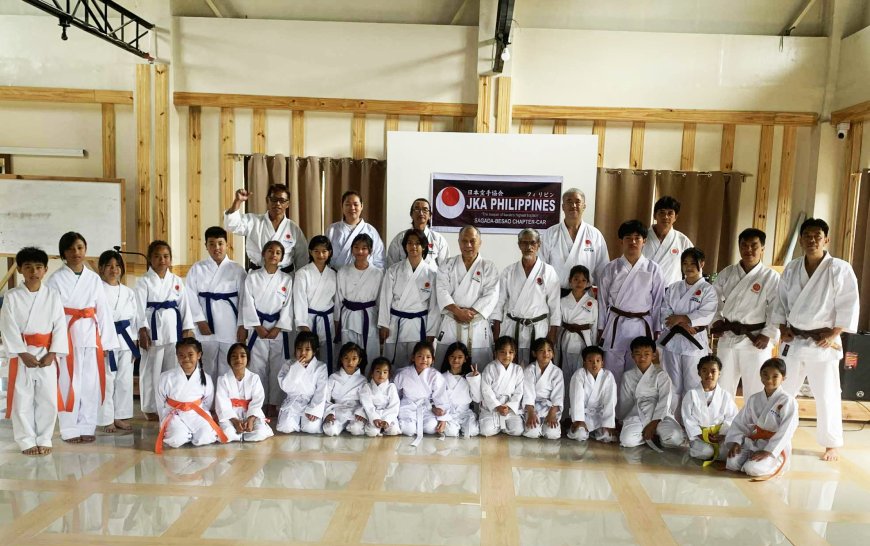
Among the most influential figures in the continued development of JKA karate in the Philippines is Gilieto Luague, a senior instructor who began training in 1969 under Takahashi Shihan. Today, Luague Shihan serves as Chairman of JKA Philippines and holds the rank of 5th Dan black belt, with certifications as a licensed instructor and officiating judge.
Luague Shihan has played a major role in expanding JKA beyond the Philippines. In 1980, while working in Saudi Arabia, he established JKA dojos in Taif and later expanded karate training across the Eastern Province, including Dammam, Al-Khobar, Jubail, Ras Tanura, and Riyadh. During this time, he also worked closely with Hideki Okamoto, the JKA representative in the Middle East.
From 1996 to 2005, Luague Shihan continued his mission in the United Arab Emirates, helping establish dojos in Abu Dhabi and Dubai while promoting traditional JKA Shotokan karate across the region.
Formation of JKA World Federation Philippines
Following developments within the international karate structure in 2018, Luague Shihan worked with senior instructors to ensure the preservation of traditional JKA standards in the Philippines. This initiative eventually led to the formation of the JKA World Federation Philippines Inc. (JKA-WFPI).
In August 2023, Luague Shihan led the 1st Philippines All Shotokan Karate International Gasshuku and Tournament in Quezon City. The event was observed by representatives from JKA headquarters in Tokyo, including senior instructor Okuma Shihan, who also conducted intensive training sessions during the gathering.
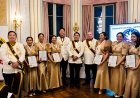
A major milestone followed on January 1, 2024, when JKA Philippines officially received recognition from the Japan Karate Association World Federation in Tokyo. The certificate of membership for JKA Philippines (PH-2) was presented to Gilieto A. Luague Shihan as Chairman and official JKA representative for the Philippines, signed by Katsuhide Kusahara, Chairman of the JKA World Federation.
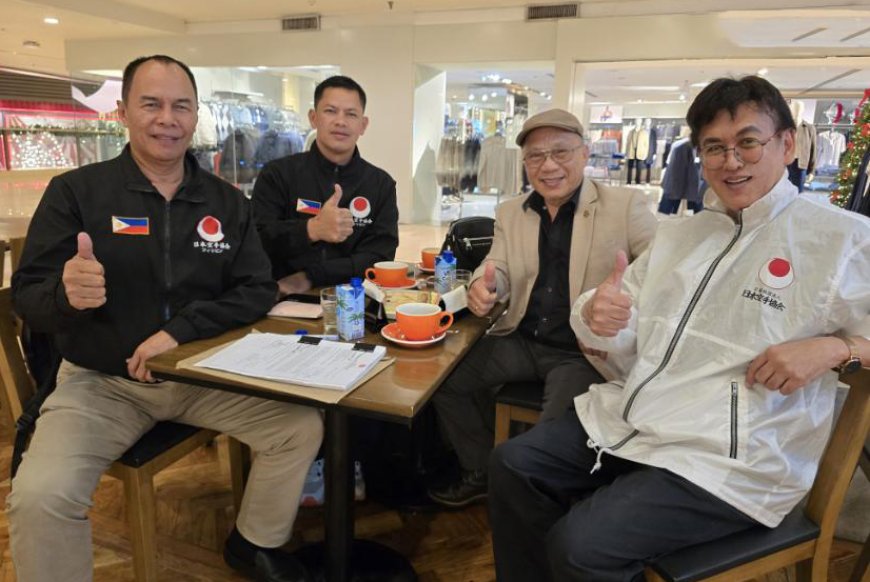
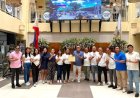
Contract signing of The 3rd JKA Philippines International Gasshuku & Karate-DO Championship hits Davao City, Aug 27–30, 2026!. From left: EMELIANO PONDOC MURILLO, CEO/ Chairman Committee on Fundraising; RODENO LAYANAN DILAG, Treasurer, Committee on Fundraising; GILIETO AMISTAD LUAGUE Shihan. Chairman, Representative to JKA WF, Tokyo, Japan; NOUBIKKO ,CEO, RPConnect
Preserving the Highest Tradition of Karate
Today, JKA Philippines continues to promote authentic Shotokan karate rooted in discipline, respect, and lifelong study of the martial art. Guided by the principle “The Keeper of Karate’s Highest Tradition,” the organization remains committed to preserving the teachings passed down by Japanese masters while nurturing future generations of Filipino karate practitioners.
With dojos and practitioners expanding across the Philippines and internationally, JKA Philippines stands as a testament to more than six decades of dedication to the true spirit of Karate-do.